12+
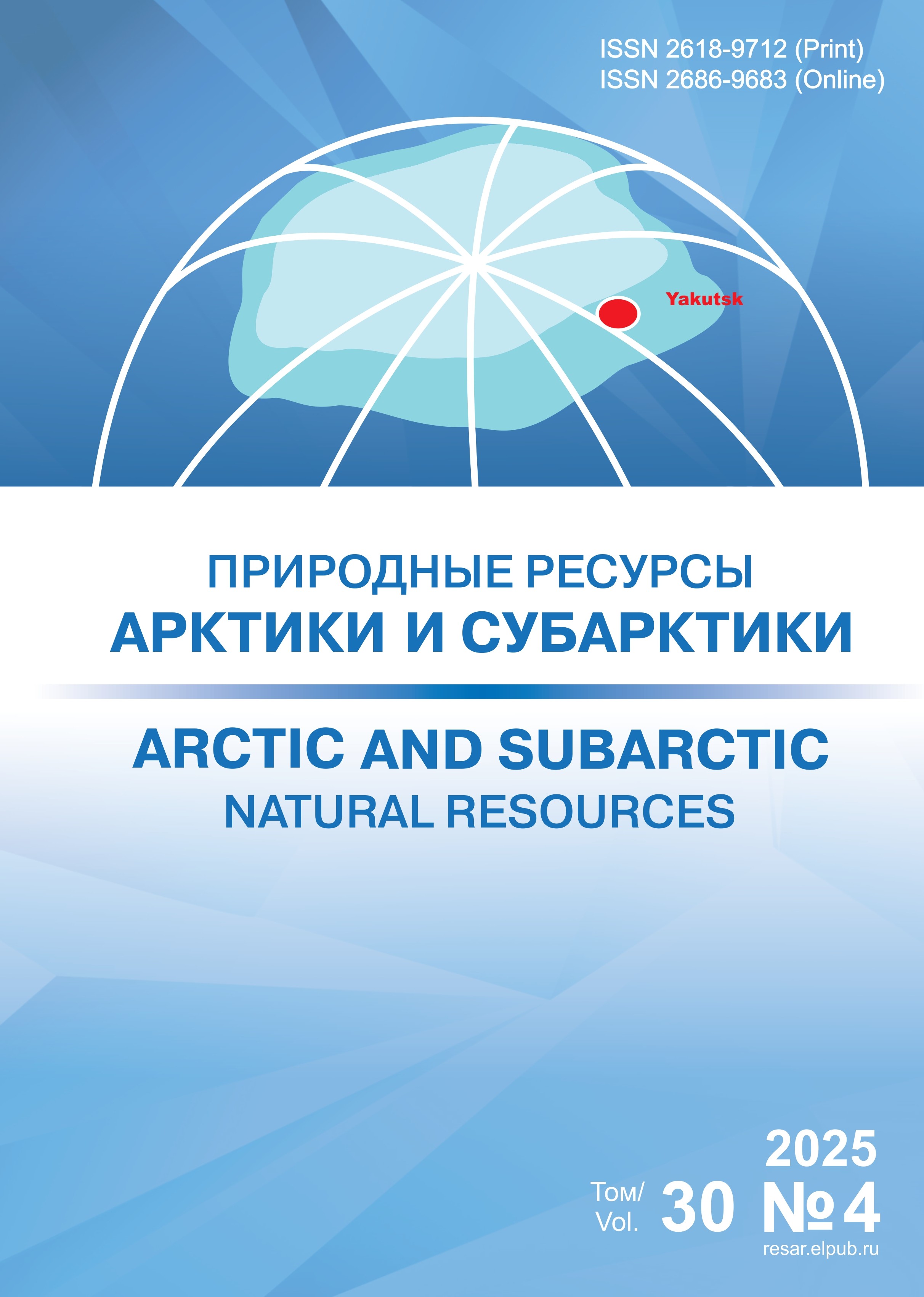
Arctic and Subarctic Natural Resources is a quarterly open-access peer-reviewed journal publishing research on geology, permafrost sciences, ecology, biological resources, and materials science. The journal aims to promote interdisciplinary dialogue among researchers addressing regional challenges, promote collaborative research, and utilize scientific knowledge to enhance public perception of scientific endeavors.
Arctic and Subarctic Natural Resources publishes original articles, review articles, and short communications. The Journal operates a double-blind peer review policy.
Articles are published in both Russian and English.
The journal publishes 14 articles per issue, with a print run of 100 copies.
The journal is founded by the Academy of Sciences of the Republic of Sakha (Yakutia), the Yakut Scientific Centre of the Siberian Branch of the Russian Academy of Sciences, M.K. Ammosov North-Eastern Federal University, and the Ministry of Education and Science of the Republic of Sakha (Yakutia).
The publisher is the Academy of Sciences of the Republic of Sakha (Yakutia), located at 33 Lenin pr., Yakutsk, 677000, Russian Federation, e-mail anrsya@mail.ru. Website: https://asyakutia.ru/
Arctic and Subarctic Natural Resources is indexed in the Russian Index of Science Citation, the list of peer-reviewed scientific publications by the Higher Attestation Commission of the Ministry of Science and Higher Education of the Russian Federation, the Russian Science Citation Index (RSCI), and the "White List" of Russian journals. It is categorized as K3 by RSCI, K2 by the Higher Attestation Commission, and K 4 by the “White List”.
Every manuscript submitted is screened for plagiarism with Antiplagiat software. The Editorial Board follows the ethical standards established by the Committee on the Ethics of Scientific Publications (COPE). The journal is officially registered with the Department of the Federal Service for Supervision of Communications, Information Technologies, and Mass Media in the Republic of Sakha (Yakutia) under Registration Certificate PI No. TU14-00503, dated February 15, 2018.
Full-text articles are available on Elibrary.ru and Cyberleninka.ru.
Publication is free of charge.
Current issue
EARTH SCIENCES. Geology and mineral resources
The gold ore potential of the Anabar Shield remains poorly understood to date. Recent discoveries of new placer deposits within the Billyakh tectonic fluid zone of the Anabar Shield, together with established genetic links to epithermal gold–telluride mineralization (tellurides of Au, Ag, Cu, Pb, and Bi) in adjacent metasomatites, have underscored the need for detailed studies of the mineralogical and geochemical signatures of gold occurrences in this region. This study examined pyrite typochemistry to constrain the geochemical and mineralogical characteristics of gold–sulfide mineralization. Based on analyses of mineral inclusions, major-element composition, and trace-element geochemistry, two pyrite generations were identified. Pyrite-1 is barren and occurs in metasomatites of eluvial deposits in the immediate vicinity of the Billyakh massif. It is characterized by high Co contents, low Ni, and generally low concentrations of other impurity elements. The Co/Ni ratio exceeds unity and shows wide variation, a feature typical of sulfides formed under magmatic–hydrothermal conditions, suggesting a high-temperature origin. Pyrite-2 is gold-bearing and occurs in metasomatites exposed by a prospecting trench at a distance from the Billyakh massif. It exhibits elevated concentrations of impurity elements, notably high Se and Te, and Co/Ni ratios below unity. Gold was detected in almost all analyzed samples (0.07 to 42 g/t) and occurs both as structurally bound Au⁺ and as native inclusions (Au0). Pyrite-2 formed under low-temperature conditions and is associated with gold–telluride-type mineralization. Collectively, these results demonstrate that the studied pyrite serves as an effective indicator mineral, providing critical information on ore formation conditions. Its typochemical features can therefore be used as mineralogical exploration criteria in the search for new mineralization.
The ores of the Khokhoy gold deposit host associated thallium mineralization, a strategically important critical element widely used in high-tech industries, including electronics, optics, and scientific research. Thallium can be recovered as a coproduct during ore processing. Here, we present the first experimental data on the microrelief of samples of rare thallium minerals (avicennite, Sb-avicennite, and amgaite) and supergene gold from the Khokhoy deposit using a scanning probe microscope (СММ-2000). More specifically, surface topography was characterized by atomic force microscopy (AFM), and for the first time, the roughness and granularity parameters of these mineral phases were quantified at the nanoscale. Our analysis revealed that all studied samples exhibit a hierarchical structure, with micron-sized grains composed of subgrains 190–220 nm in size. In addition, granulometric analysis yielded a stable median particle diameter of 80–85 nm, suggesting a colloidal origin for the mineral aggregates formed in the supergene zone. Consequently, the presence of gold and thallium in submicroscopic and nanoscale forms within the ores must be considered when developing extraction technologies for complex ores. Overall, these findings expand the current understanding of the typomorphism of gold and thallium minerals and the mechanisms governing their secondary alteration.
Oil pollution in the soils of the Arctic region is mainly concentrated on oil and gas complexes. However, it can also spread to other environmental compartments, adding to the severity of the region’s environmental problems. Currently, biological methods for soil remediation are widely recognized as the most effective and environmentally friendly approach. A study at the Nizhnekolymskaya oil depot revealed localized areas contaminated with different petroleum products, including diesel fuel and heavy oil fractions. A field experiment conducted over two summer months revealed that diesel fuel contamination was actively biodegraded (54 % degradation) when the soil was treated with the biopreparation based on indigenous hydrocarbon-oxidizing microorganisms. Meanwhile, oxidation processes were significantly slower in the control plot without the biopreparation (35.5 % degradation). For contamination with heavy oil fractions, the effect of bioremediation was generally less pronounced, with degradation rates of 20.1 % and 12.6 %, respectively. This lower efficiency of soil remediation for heavy oil fractions is explained by the peroxide theory of microbiological oxidation, which proceeds via free-radical chain mechanism. The initiating of microbiological oxidation begins with easily oxidizable hydrocarbons, which, in this case are relatively low-molecular-weight n-alkanes. With their low content, the initiation of the oxidation process is difficult, and the chain reaction develops more slowly. Under such conditions, the biopreparation application becomes ineffective, that requires alternative approaches for cleaning soils contaminated with this type of pollutant.
Among the typomorphic features of rough diamonds, only the defect-impurity composition is preserved after their processing into jewelry diamonds. In this study, 60 samples from three different deposits of the Yakutian diamond province were examined. The concentrations of H-, B2-, N3-, P1-, 490.7-, N3V-centers in the original rough diamonds and in the polished diamonds derived from them were determined using IR, UVVis, and EPR spectroscopy. Correlation-regression analysis of the obtained data revealed correlation between the concentrations of impurity defects in the original rough diamond crystals and in the resulting jewelry diamonds, indicating an “inheritance” of the defectimpurity composition from the rough to the polished diamonds. Based on the experimental data, linear regression models were derived to describe the dependence of defect concentrations in polished diamonds on their concentration in rough diamonds from the specified deposits. However, because the formation conditions of diamonds from different deposits can be similar, it is not possible to determine the geographic origin of the original diamond from the impurity-defect composition of a single polished diamond. The results indicate that, assuming the diamonds originate from the same deposit, a statistically significant sample for determining their source deposit consists of 400 polished diamonds.
EARTH SCIENCES. Engineering geology, permafrost and soil sciences
In areas underlain by ice complex deposits, degradation of the protective layer activates cryogenic processes, leading to surface disturbance, alterations in ground heat and moisture regimes, and loss of permafrost landscape stability. Disturbed sites with shallow polygonal-wedge ice are especially vulnerable. Pre-winter irrigation is considered a method for the controlled modification of heat and moisture transfer in the upper part of ice-rich deposits of the ice complex in Central Yakutia. The method is intended to accelerate the formation of a transitional (protective) layer in areas disturbed by thermokarst. This study aimed to assess, through coupled modeling of heat and moisture transfer, the optimal pre-winter irrigation rate that creates conditions for the formation of an ice-saturated protective layer without over-wetting the seasonally thawed layer. To achieve this, the study draws on meteorological data from the Amga station and thermal and moisture monitoring data from experimental sites in the Amga River valley. The model was implemented in COMSOL Multiphysics and includes a heat transfer equation accounting for phase transitions using the apparent heat capacity method, as well as the Richards equation for variably saturated flow. A series of prewinter irrigation scenarios ranging from 0 to 500 mm was calculated, with control of the transition to a quasi-steady-state regime. Under the considered conditions, the optimal pre-winter irrigation rate ensuring the formation of an ice-saturated protective layer was found to be no more than W = 300 mm, depending on the initial moisture conditions of the seasonally thawed layer. However, at W = 100 and 200 mm, the infiltration front does not reach the lower part of the seasonally thawed layer, whereas at W = 400 and 500 mm, the amount of unfrozen water begins to increase and the temperature of the underlying permafrost rises. Therefore, these results can be used in planning permafrost reclamation measures in areas with ground ice development, including the ice complex, and in selecting pre-winter irrigation regimes.
BIOLOGICAL SCIENCES. Ecology
The Yakut horse (YH) represents a unique model of the microevolutionary adaptation in large mammals to the harsh, sharply continental climate of Northeastern Russia, where seasonal temperature differences can reach approximately 100 °C. This study investigated the role of the endogenous ethanol–acetaldehyde system and its metabolizing enzymes— alcohol dehydrogenase (ADH) and aldehyde dehydrogenase (ALDH)–in the cold adaptation mechanisms of this native species. Blood and liver samples were collected from YHs during winter (n = 35) and summer (n = 35). Gas chromatography-mass spectrometry (GC-MS) analysis revealed that winter blood levels of endogenous ethanol (EE) were significantly elevated, increasing 1.5-fold to 0.92 ± 0.08 mmol/L (p = 0.001). This elevation suggests that EE acts both as a highly efficient energy substrate under conditions of tissue hypoxia and as a membrane stabilizer, preventing crystallization at low temperatures. Furthermore, endogenous acetaldehyde (EA) levels in winter blood showed a more pronounced 3.66-fold increase, reaching 9.51 ± 0.75 mmol/L (p < 0.001). This high EA concentration appears to function as a systemic regulator of energy metabolism, facilitating a transition to a state of adaptive hypometabolism (“winter metabolic rate”) that reduces both heat loss and nutritional requirements. Notably, the ADH concentration in the YH liver was found to be ten times higher than in other homoiothermic northern species and in humans, representing a genetically fixed, constitutive mechanism underpinning this metabolic plasticity. Collectively, these findings suggest that the remarkable cold resistance of the Yakut horse is attributable to its capacity to switch to metabolically economical functional states via dehydrogenase-mediated pathways. This adaptation likely constitutes a fundamental molecular strategy for the survival of cold-adapted homoiothermic animals in the extreme environmental conditions of high latitudes.
Intensive industrial development in the Arctic and Subarctic regions poses a serious threat to the quality of reindeer herding products. The scientific literature reports that reindeer meat and by-products frequently contain toxic contaminants at concentrations exceeding permissible limits. In the Russian Federation, allowable pollution levels in reindeer products are regulated by the technical standards of TR CU 021/2011. This study presents the results of an assessment of lead (Pb), mercury (Hg), and cadmium (Cd) accumulation in liver tissue samples from domestic reindeer (Rangifer tarandus) of the Yamal Experimental Station, located in the Priuralsky District of the Yamalo-Nenets Autonomous Okrug. Heavy metal concentrations were determined using inductively coupled plasma atomic emission spectrometry (ICP-AES), whereas mercury was analyzed via atomic absorption spectrometry using a PA-915+ mercury analyzer equipped with a PIRO-915+ attachment. Analysis of 22 liver samples revealed that lead concentrations ranged from 0.10 to 0.36 mg/kg, remaining below the regulatory limit of 0.5 mg/kg. However, cadmium concentrations varied from 0.30 to 0.96 mg/kg, with a mean value of 0.67 ± 0.19 mg/kg; moreover, all samples exceeded the permissible limit of 0.3 mg/kg. Similarly, mercury levels ranged from 0.06 to 0.126 mg/kg, averaging 0.086 ± 0.016 mg/kg, yet only 13.6% of samples exceeded the normative value. The highest inter-sample variability was observed for cadmium (coefficient of variation: 34.5%), followed by lead (29.0%) and mercury (19.3%). The concentration range for cadmium (0.30–0.96 mg/kg, span 0.66 mg/kg) was approximately ten times wider than that for mercury and 2.5 times wider than that for lead. Notably, the observed accumulation levels are consistent with findings from reindeer studies in other regions. Thus, it is plausible that the elevated toxic element content in the liver of this herd may be attributable to an increased proportion of lichen in the diet during the pre-slaughter fattening period.
The Siberian jay (Perisoreus infaustus) remains a relatively poorly studied species over most of its range. The aim of this work was to summarize long-term studies of the Siberian jay’s ecology in Yakutia, where the species exhibits maximum eurybionticity and serves as a convenient model for studying the adaptations of sedentary birds to the extreme conditions of the Subarctic. Fieldwork was conducted from 1987 to 2024, mainly at two monitoring sites in Central Yakutia, using individual bird tagging and other methods of intravital data collection. Further information was obtained from stationary and route censuses conducted in various taiga subzones. The report also assesses the state of knowledge of the Siberian jay in Yakutia, distinguishing three stages: accumulation of records on distribution and nesting (from the mid-19th to the first half of the 20th century); synthesis of available data on nesting biology and determination of range boundaries (second half of the 20th century). From 1987 to the present, a more in-depth study of the species’ ecology has been carried out using monitoring sites, individual tagging, and genetic methods. The Yakut population of the Siberian jay is characterized by a sedentary lifestyle, territorial conservatism, and a distinct demographic structure comprising residents and immigrants. Several adaptive strategies have been identified, including winter nesting in March–April under conditions of intact or persistent snow cover, larger clutches compared to conspecific populations, and a negative correlation between nest altitude and air temperature. Genetic studies have revealed a high level of differentiation from the Sichuan jay (Perisoreus internigrans) and differences between the Siberian jay populations in Sweden and Russia. These results provide a basis for long-term monitoring of the species’ status in the face of increasing anthropogenic pressure and climate change. Future research should incorporate remote sensing methods and a detailed analysis of the influence of abiotic factors on seasonal events in the ecology of the Siberian jay.
The significance of the discovery of ancient saiga (Saiga tatarica L.) remains for the biostratigraphy of the Late Pleistocene of Northeast Asia is difficult to overstate. This antelope, which now inhabits the steppe zone from Mongolia to Kalmykia, led to the introduction of the term “tundra-steppe” in the early 20th century to describe the Late Pleistocene landscapes, when saiga remains began to be found in the same geological layers as musk oxen (Ovibos moschatus Zimmermann, 1780), which now inhabit only the tundra. Late Pleistocene saiga finds are quite rare and, prior to this study, had been found in Yakutia only in the Yana and Kolyma basins and on the Lyakhovsky Islands. The saiga horn core discovery presented in this article is the first from the middle reaches of the Indigirka River, thereby expanding the known range of this species in the Late Pleistocene of Yakutia. The aim of this work was to describe a new paleontological find of a saiga horn core. The study material consists of a fragment of a skull roof with an incomplete left horn core (specimen BdM-24/1), discovered in 2024 on the right bank of the Badyarikha River (a right tributary of the Indigirka River) in the same stratigraphic layer as representatives of the mammoth fauna. Radiocarbon dating of the sample was performed using accelerator mass spectrometry (AMS) at the Institute of Archaeology and Ethnography SB RAS, yielding an age of 40,910 ± 1,645 years BP (GV-05723). This new find is the first record of saiga in the middle reaches of the Indigirka River and makes an important contribution to the study of Late Pleistocene paleolandscapes in this region.
In the modern era, the conservation of biodiversity, particularly rare species of plants and animals, has become critically important. Oxytropis sсheludjakovae Karav. et Jurtz is a relict and narrow aryan endemic of the northern Far East and Eastern Siberia. Currently, the only protection measure for this species is ex situ conservation in the Yakut Botanical Garden (Institute for Biological Problems of Cryolithozone SB RAS) and in the Botanical Garden of the M.K. Ammosov North-Eastern Federal University. Microclonal reproduction technology serves as a complementary tool alongside traditional methods of preserving the plant gene pool. The development of effective in vitro propagation protocols enables the preservation of valuable species and the production of more viable samples for bank replenishment and reintroduction programs. This work presents a biotechnological method for the reproduction and preservation of O. sсheludjakovae. Seeds and microplants derived from them served as the starting material. All experiments were conducted on an agarized Murashige and Skuga (MS) medium. Introduction to in vitro culture and subsequent passages were carried out under laminar flow conditions. The culture room maintained illumination conditions of 2,000–3,000 lux, a 16-hour photoperiod, and a temperature of 23 ± 2 °C. Seed germination was 53.3%, and viability was 15.8%. The effects of three growth regulators – 6-benzylaminopurine, thidiazuron, 1-naphthylacetic acid – each at a concentration of 0.5 mg/l of medium were assessed on microclonal propagation and rooting of the studied species. Additional shoot formation occurred on all media types. Rhizogenesis was observed on MS medium supplemented with TDZ. Root formation also occurred during prolonged cultivation on control medium. The most effective medium for obtaining microclones, which reduces the time and economic costs for producing plant material, was MS with the addition of 0.5 mg/L TDZ.
BIOLOGICAL SCIENCES. Biological resources
Revision is a fundamental and integral component of scientific activity that ensures the preservation, updating, and organization of collection funds. This article presents a partial review of the results from a revision of the Vascular Plants Department of the Herbarium of the Institute for Biological Problems of Cryolithozone, Siberian Branch of the Russian Academy of Sciences (SASY). Founded in 1949 at the Yakut Branch of the USSR Academy of Sciences, the herbarium was established to identify and document the taxonomic diversity of plants. This study aimed to examine the herbarium materials housed in the main collection of the Vascular Plants Department of the SASY Herbarium and to clarify the distribution of plant species across the floristic zones and administrative districts of Yakutia. As a result of the herbarium revision and the verification of regional floristic and geobotanical publications, more than 140 species and subspecies (taxa) from 82 genera and 32 families were found to require revision. This article presents data exclusively from previously unpublished, verified collections that extend the known ranges of these taxa in Yakutia. Collection sites and floristic regions are provided. These findings represent new records for the basins of major rivers, for specific floristic regions, and for Yakutia as a whole. The families identified for review in this initial publication include Alliaceae (Amaryllidaceae), Asteraceae, Chenopodiaceae (Amaranthaceae), Cyperaceae, Ericaceae, Fabaceae, Haloragaceae, Juncaceae, Lamiaceae, Malvaceae, Orchidaceae, Poaceae, Polygonaceae, Primulaceae, Pyrolaceae (Ericaceae), Ranunculaceae, Rosaceae, Salicaceae, Saxifragaceae, and Scrophulariaceae (Orobanchaceae). This article is the first in a series of publications based on the revision of the SASY Herbarium, providing a more comprehensive list of species by region with updated taxonomy and nomenclature, which can serve as a taxonomic resource for floristic and phytosociological research.
MATERIALS SCIENCE AND CHEMICAL TECHNOLOGIES
A significant drawback of polytetrafluoroethylene (PTFE) is its high wear rate under friction, which is addressed by adding various modifying fillers to the polymer matrix. This study aimed to determine the effect of the fabrication method of a polymer composite material based on a PTFE matrix filled with nanoscale zirconium dioxide (ZrO₂) powder on its tribological properties. A comparative analysis was conducted on samples produced using two different methods. The first method involved drying the starting components in an oven at 120 °C, followed by rapid air cooling of the composites. The alternative approach consisted of dehydrating the starting powders in a vacuum oven at 150 °C for 4 hours, followed by sintering and slow, controlled cooling of the composite inside the furnace at a rate of 0.3 °C per minute. Optical microscopy was used to analyze the friction surfaces of the specimens and counterfaces after wear testing. Primary and secondary wear mechanisms (abrasive, adhesive, and fatigue) were identified. The wear intensities and coefficients were calculated, revealing increased wear resistance for the composites manufactured using the method that involved dehydration and slow, controlled cooling after sintering. From the tensile test results, mechanical properties such as tensile strength, relative elongation, and elastic modulus were determined. A mechanism for the increased wear resistance dependent on the fabrication method is proposed, consisting of the removal of residual hydroxyl groups and the formation of large, ordered lamellar structures. Thus, the developed polymer composite material is suitable for use in metal-polymer dry friction units.
Increasing the rate of gas dissolution in liquids is a critical priority for many industries, from chemical engineering and wastewater treatment to the food industry (e.g., beverage carbonation) and medicine (e.g., oxygen therapy). This study aimed to identify which approaches and principles for organizing mass transfer processes during gas absorption by liquids using ultrasound are most effective for creating industrial gas saturation systems. As part of this work, a method for controlling the liquid–gas interface structure was developed. To study the gas absorption process, a laboratory setup capable of maintaining a stable temperature of a liquid–air dispersed system was also developed. When the temperature of a water–glycerin solution increases from 18 °C to 60 °C, the limiting viscosity at which capillary waves form on the liquid–gas interface increases. At elevated temperatures, an increase in the number of disturbances on the interphase surface of a bubbling bubble is observed in liquids with a dynamic viscosity of up to 41 mPa·s. Further research aims to refine the optimal temperature regimes for highly viscous liquids (oil, motor oils, epoxy resins), polymer melts, and gases (ozone, carbon dioxide) based on these findings for water–glycerin mixtures. The results have high practical significance, as the developed method–based on high-intensity ultrasound combined with process temperature optimization–significantly reduces energy consumption for dissolving gases in liquids. This is particularly relevant for isolated energy-deficient areas, including the Arctic regions of the Republic of Sakha (Yakutia), and contributes to increased economic efficiency and environmental safety of such production.
Railroad operation in the subarctic climate of Central Yakutia contributes to accelerated service life exhaustion and fracture of rails and locomotive wheels. This paper presents an analysis of microstructural degradation in Charpy impact test specimens made from a rail section at various distances from the rolling surface. The rail was in active service on the Tommot-Yakutsk railway section during the winter season. Morphological analysis of fracture surfaces of rail steel specimens using scanning tunneling microscopy revealed microstructural heterogeneity, which causes changes in mechanical properties, accelerated pore and crack formation, and damage accumulation during operation. Data on the morphology, structure, and elemental composition of the material in stress zones near fracture surfaces were obtained. The aim of this work was to identify the relationship between the nature of structural changes in rail steel during operation in northern conditions and the patterns of change in steel characteristics by establishing an analytical relationship between material damage and the Griffiths destruction criterion. Fracture micromechanisms were identified. A service life assessment algorithm based on the theory of structural damage accumulation was developed. The characteristics of ductile-brittle fracture were identified, including patterns of pore and crack growth, heterogeneity of damage accumulation, and accelerated degradation of mechanical properties. Optical and scanning tunneling microscopy were used to identify grain heterogeneity in the metal. An analysis of theoretical damage accumulation models was performed, and it was demonstrated that the nonlinear Lemaitre-Chabosche model accounts for changes in the material degradation rate depending on the structural state. The relationship between the damage parameter, the Griffiths criterion, and the percolation limit of the medium was determined. These fundamental results have practical applications in assessing the technical condition and service life of metal structures and in creating digital twins of complex technical systems operating in extreme climatic conditions.
CONFERENCES
On June 9, 2026, Yakutsk hosted an expanded joint meeting of the Presidium of the Russian Academy of Sciences and the Government of the Republic of Sakha (Yakutia), devoted to the theme: «The Arctic – a territory of new strategic innovative solutions: achievements, frontiers, and challenges.»
News
2026-04-24
EDN (eLIBRARY Document Number)
Dear Authors,
In 2026, all publications in the journal Arctic and Subarctic Natural Resources will be assigned an EDN code.
Important: Authors are required to include the EDN code in the Reference List. We recommend adding the EDN code at the end of each bibliographic entry in the following format: EDN: XTIRDN.
| More Announcements... |

ISSN 2686-9683 (Online)